

History
If you’ve ever moved to the groove of “Papa Was a Rolling Stone” by The Temptations, Marvin Gaye’s “Let’s Get It On,” “Smiling Faces” by The Undisputed Truth, or the funk fire of Herbie Hancock’s “Man-Child”, you’ve already felt the unmistakable magic of Wah Wah Watson.
Born Melvin Ragin, Watson was a legendary guitarist, songwriter, producer, and creative force whose signature riffs, licks, and grooves helped define the sound of soul, funk, R&B, and pop music through the ’70s and beyond. As a key architect of the classic Motown Sound, and a vital part of Motown’s house band, Watson’s guitar became a distinctive and unforgettable voice woven through the soundtrack of generations. Collectively, those recordings have sold over 100 million copies worldwide.
Watson’s journey began in Detroit, where, at just 20 years old, he was called by visionary Motown producer Norman Whitfield to play on Edwin Starr’s “Stop the War Now.” From there, he became deeply embedded in the heartbeat of Motown, recording with The Jackson 5, The Supremes, The Four Tops, Martha Reeves, Gladys Knight & The Pips, and Junior Walker & The All Stars. His wild, chugging, expressive wah-wah style — raw yet sophisticated — became a new musical language, especially on tracks like “Papa Was a Rolling Stone,” where his guitar practically sang the story itself.
Watson was part of the famed 12-piece Motown band led by Hamilton Bohannon. It was during this time that he earned the nickname “Wah Wah” and honed the sound that would soon echo through every corner of American music.
He brought fresh fire and originality to the Motown sound, helping to shape a new era with psychedelic soul, lush textures, and deep-pocket funk.
One of Wah Wah Watson’s most remarkable gifts was his ability to layer guitar parts with uncanny precision and flow — creating interlocking grooves that felt as organic as a heartbeat. He knew exactly when and how to stack textures so they played off each other, each part dancing in conversation with the next. He called it “putting the motor on it” — a kind of rhythmic and melodic engine built from layered complexity that somehow always sounded seamless, effortless, and alive. This signature approach pulses through so much of his work, turning what could have been mere accompaniment into a driving, soulful force.
When Motown moved to Los Angeles in 1973, Watson followed — initially called by Norman Whitfield for what was supposed to be a four-day session for Rare Earth’s Ma album. But Watson never went back to Detroit. He plugged straight into the West Coast studio scene and never left, becoming one of the most in-demand session players of his era.
Among his most notable collaborations was his extensive work with Barry White. Watson was a key contributor to White’s signature sound, playing guitar on numerous recordings and performances. He was a member of The Love Unlimited Orchestra, White’s 40-piece ensemble known for its lush, string-laden arrangements. Watson’s guitar work is featured on tracks like “Love’s Theme,” where his wah-wah-infused rhythms added depth to the orchestral soul sound. He also played on White’s 1987 album The Right Night & Barry White, contributing both guitar and backing vocals.
His collaborations extended far beyond Motown’s reach — into the stratosphere of modern music. He became a trusted creative partner to Herbie Hancock, co-writing and co-producing landmark albums like Man-Child, Secrets, V.S.O.P., Feets Don’t Fail Me Now, and Mr. Hands. He played a key role on Michael Jackson’s Off the Wall, Quincy Jones’ Body Heat, Rose Royce’s Car Wash, and Maxwell’s Urban Hang Suite, blending gritty soul, shimmering funk, and fearless innovation at every turn.
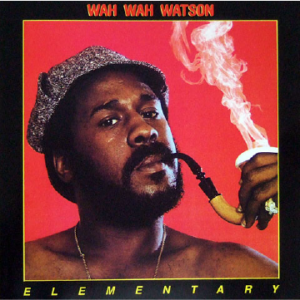
In 1976, Watson stepped out as a solo artist with his own groundbreaking album, Elementary, released on Columbia Records. A bold fusion of funk, soul, jazz, and experimental textures, the album showcased his full range not only as a guitarist but as a composer and producer. Elementary remains a cult classic — revered by musicians and crate diggers alike for its adventurous spirit and unmistakable groove.
On stage, Watson brought the same electricity. He toured with giants like Marvin Gaye — most memorably as part of Gaye’s Midnight Love Tour in 1983, sadly the last tour before Gaye’s untimely passing. Whether in the studio or on the road, Wah Wah’s presence was always magnetic: a deep river of rhythm, soul, and playfulness.
But Wah Wah’s legacy isn’t just recorded in the grooves of vinyl and tape — it’s also found in the next generation. Teaching was his other passion. He dedicated time to working with the Thelonious Monk Institute’s Jazz in the Classroom program, alongside Herbie Hancock, Joshua Redman, and Clark Terry, and served as a mentor through the Los Angeles Unified School District’s Jazz Mentorship Program. His generosity of spirit matched his genius, always encouraging young artists to find their own unique sound.
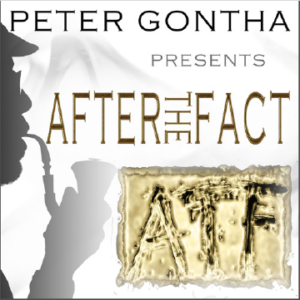
In his later years, he continued to push his creativity forward, leading new projects like After the Fact, an album filled with joyful, timeless grooves crafted for all ages. He also spearheaded the Wah Wah Funk & Groove project, bringing together over 30 top musicians to celebrate the power of live, heartfelt music.
In October 2003, Wah Wah Watson was honored at the Motown Historical Museum’s “Man of Motown” tribute in Detroit — a city he helped shape with his sound.
Though Wah Wah Watson has passed on, his spirit vibrates forever in every unforgettable riff, every fearless groove, and every soul he moved. His music continues to inspire, teach, and electrify — a living testament to the life of a true original.
Discography
Wah Wah Watson – Elementary
ATF – After The Fact
Shop
What age did you begin playing musical instruments?
Maybe about 10 or 11 I played the ukulele. There was a man who lived two doors from me named Mr. Williams. When I’d come home from school I’d see him on the porch and I’d sit down and listen to him play. One day I asked him, “Mr. Williams, can you teach how to play the ukulele?” I was amazed at his playing because he was blind. It just so happened he had another ukulele and he taught me how to play. I would rush home from school sit on the porch and play with him. I’ll never forget it [….starts to hum a few notes of the song.] Ya know it wasn’t any Hawaiian music. I didn’t have on a grass skirt!
When did you begin playing your first guitar?
I remember one day we went up to this music store because my Mother had to have a head put on her tambourine for church. When we would go to the store I would always look at the guitars. I thought maybe one day I could get a guitar. I asked the guy, “do you have any used guitars?” He said, “You know it just so happens we do have a guitar that just came in.” I asked how much it was and he said it was fifteen dollars. I begged my mother to buy it. I think we gave him $7 down on the guitar. It was an acoustic guitar with one of those brown rag cases. Two doors down on the other side of my house, there was a guy who played gospel and he played guitar. In the summertime you could hear him on the street and I used to mimic what I was hearing. My older brother began playing as well. I started taking my guitar to church. Nobody could hear me because it was acoustic.
When did you get your first electric?
I was sitting on the porch one day and I saw my Father walking down the street. He said to go help my mother because the car had broke down. I’ll never forget it! A black’54 Pontiac. I didn’t want to but my Dad made me. I walked down the street to my Mother and she said to get the boxes out of the trunk. I looked and she had went to Sears-Roebuck and bought me a Silvertone guitar with the little amp. I was like a pig in shit. I was so happy. I used to sit around the house and play all the time. My brother used to mess around with it. Then he started playing with a band. He never let me play with his band because they thought I was too young. I wound up being better than him by the time I was 14 or 15 years old. Any gigs my brother couldn’t do, I would do. It was great because I could only play on weekends and I could make $5 a night. Sometimes I’d luck up and make $15 in a weekend. $15 was a lot of money back then because you could get those kangaroo shoes…. You’d spit-shine the toe and it was like, “don’t step on my blue suede shoes.” It was cool. You could get an extra lunch with an extra roll and an extra dessert. Beside that my father didn’t have to give us lunch money
What was your first experience in a band?
I was standing outside and the town was having a parade. I’ll never forget. There was this band called the Montclairs. They sounded pretty good. They were playing on the back of a pickup truck.
So how did you land at Motown?
Bobby Taylor heard me play one night and decided he wanted me to join his band. He talked to my Father and finally convinced him to let me go to Detroit. It just so happened that my mother had a sister in Detroit. So when I first got to Detroit I stayed with her. It was really interesting because she owned a restaurant and her husband was a plant worker. You see, years ago either you work at Phillip Morris, Dupont, RJ Reynolds, places like that or the post office. These were good jobs. You stick with them. When I went to Detroit everyone worked for a factory: GM, Ford and all that stuff. She was kinda board so she opened up a restaurant. It was a little joint with typical foods. You know hamburgers, fries and etc. I think her husband was alcoholic but it didn’t bother me. I kind of knew what it was though I had never drank before. My Aunt always told me that I should stay away from alcohol because it drains your creativity. But I didn’t have to deal with my Aunt and Uncle that much because with Motown I was always on the road.
How long before you moved on your own?
When I got to Motown I lived with my Aunt for the first six months. When I moved out, I moved to this hotel right next to Motown. It was called the Royal Palm Hotel, and man it was full of pimps and hoes. It was fine because half of the time I was out on the road. I’ll never forget the guy who ran the hotel for his mother. There was one room they had knocked a couple of walls out. It was like a suite. It had three bathrooms, a big bedroom and a piano in it. I forgot how much it cost but everybody would be saying, “Let’s go by Wah Wah’s!”
When you began playing for Motown how did the players accept you?
The guys at Motown laughed at me when I first came in. They had their clique. They had just finished doing “Cloud Nine” with Dennis Coffey playing wah wah. I used to see how Norman Whitfield used to treat him. Robert White took me under his wing. Once they let me in they took a liking to me.
What was your introduction to the wah wah pedal?
I saw Dennis playing this pedal and one day I asked what kind of pedal he was playing and he said it was a wah wah pedal. He told me where to get one. I was playing with Bohannon at the time. They were twelve pieces and Michael Henderson would play trumpet and Ray Parker would play guitar and I would play guitar. This guy Henderson used to own a music store. One day I walked into his store and asked him if he had a wah wah pedal. He took out the black case. It was a Vox Cry Baby and I don’t remember how much it was. He let me borrow it some of the time because he knew I wasn’t going anywhere. I looked at the instructions, “down up down up.” It didn’t sound right, but everytime I got a chance to play something it would be “wah kow wah koh wah.” I was the guy that was floating around when Bobby was too busy. That was when I played with the Undisputed Truth and The Originals.
How did you get the name Wah Wah?
I remember I had an Acoustic 260 amp. It had two 18″s in it and it had a blue horn on top, dual channels and it had a tuning fork in it that I would tune to 440mhz. The way it was done back then was they had the amps in the back of the stage and the horns would be at the front of the stage. The horn players were older guys, maybe fifty. One guy, I think his name was Hooks, had slicked back hair and the ring around his lips so everybody knew what he played horn. Sometimes before we would begin playing he would say, “Turn that chooka chooka wah wah shit down!” So every now and then people would ask me my name and I would tell them “Chooka Chooka Wah Wah.” It later shortened to Wah Wah. People in the crowd people started chanting “Wah Wah, Wah Wah” and the name stuck.
Is Watson your real last name?
No…
Where did the last name Watson come from?
One time I was trying to get through on the phone to someone and it was busy. Back then we didn’t have any call waiting so you could ask the operator to break through and ask the person if they wanted to get off the phone to accept the call. The operator ask my name and I told her “Wah Wah”. He said he couldn’t say that over the phone so he asked for my last name and it just didn’t sound right. So I started thinking. I knew the KKK had three K’s in a row that seemed to give it power and I wanted something that was more powerful. I thought Wah Wah Washington, Wah Wah White, but it didn’t click until I said “Wah Wah Watson.” I said, “That’s it, that’s my name,” I thought. Then it all made sense. As I began to get good at the wah wah, I began to think about changing my style. I started incorporating more percussive kinds of rhythms. So when I started doing sessions, which I think the first one I used it on was the Four Tops, “Nature Planet”, it got to the point that the name really meant something.
What separated you from the other players?
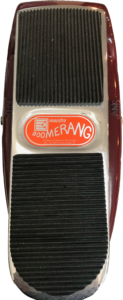
I started using more effects and getting more technical. I got involved in the seventies with Maestro: Bob Moog and Tom Oberheim. They made a phase shifter, the Boomerang Wah Wah, the Universal Synthesizer, and a modulator. They’d fly me to Hawaii or wherever to do clinics. We would demonstrate how people could use the effects. People would see how it worked and off of impulse buy the products. The stores made money, I would get flown to nice places, and get the equipment for free. Then I think Pearl merged with Maestro. Golf and Western owned Pearl. I didn’t know what merging was before, but I soon saw that they had a lot of other gear that they sold as well. The first one I tried was the fuzz pedal. I didn’t like it because that was rock. I mean, I liked Jimmy Hendrix, but I didn’t think I’d be playing that. Then I did “Death Wish” with Herbie Hancock in ’73. I remember the year The Exorcist came out and Linda Blair’s head went around and made that noise and began spitting stuff up. I thought I could make that noise with the fuzz and the wah wah. So I began creating different conversations between the effects. The straight guitar is one conversation, the wah wah is another, the Echoplex is another conversation and so is the fuzz. So I only used that fuzz for one thing, the growl. People would ask what I was thinking about when I made that growl sound. I said, “remember when Linda Blair spun her head around and spit out that pea soup? That’s all it is.” So I looked at it more like sound effects.
When was the first time you played the wah wah live?
“Shaft” came out while I was playing with The Undisputed Truth. We were playing at the NBC Convention Center in Hawaii. We were opening for the Commodores and the Jackson Five and we had Smiling Faces from the Undisputed Truth. I remember Norman saying he wanted the kind of stuff like on Shaft. I wanted to take it to another dimension. More pulse, more motor-oriented. I would sit in the studio and after I had already done my part, Norman would track the vocals and sometimes things would still not be happening. So I would help them transition. I could sense how technical I had become. I had changed from my Curtis Mayfield and Wes Montgomery roots. I was technical yet I knew what I was trying to say and I knew how to do it. I played on “Nature Planet”, “Up the Ladder to the Roof”, “ABC”, and everybody knew who Motown was.
How many songs do you think you’ve play on?
I really don’t know. Too many to count. I just keep doing what I do and take the knowledge that I’ve learned and sit down and figure out ways to do what feels good to play. I wasn’t in this to become the best with the most songs. I was just in it to for the love of music and to make a living doing something I love.
Has that lifestyle ever been a problem for you?
Filling out applications and trying to get credit, I would put self-employed and the red light would go off. My parents would always say that it was important to have A1 credit so I would never limit myself from the things I need or want.
What were the standards of Motown taught you?
Motown was an independent black record company. When I got there you had Jamerson, Earl Van Dyke, Joe Messina, Eddie Willis, Dennis Coffey, and Robert White. They were my mentors. Motown had their own writers, producers and choreographers. They had people to teach dance moves to the Supremes, Temptations and the Four Tops. Some producers would have breakfast or sandwiches waiting for us and we’d sit around and eat and talk then we’d go in the studio and we’d knock out whatever project. It was business. It wasn’t like royalty but they knew they had to act a certain set of standards. They knew how to deal with success gracefully. When a person said be there at 7 o’clock, you knew they would be there on time. You were taught this! It was always better to be there a little early than have to be there late and make up an excuse. Little things like this you would learn.
How do you think other people see Wah Wah?
I always speak my mind and a lot of people don’t want to hear the truth. To a lot of people I’m aggressive and arrogant, but I just don’t bite my tongue. My old lady says I lack tact and diplomacy. I don’t just go out to disrespect people. I wouldn’t want that done to me. I am respectful but I speak my mind. Some people come up to me and tell me a bunch of stuff I’ve done and that I’m a legend. I say I’m not. I’m just a musician who worked a lot.
List some of the people you have your fondest memories recording with?
I think the most enjoyable sessions I had were with The Temptations. It was just me and the producer in the studio. That’s what taught me about the art of overdubbing. That’s why I can come up with so many different options as far as how to play a figure. They would just tell me to lay it back or more moody and I knew what it meant because I was hearing it my mind four dubs down the line. Musicians today don’t understand that. If you listen to Smiling Faces you can hear how a mood can pick up the song. It was supposed to move at the point where I began playing double time and I knew what to do. Nowadays when I record I have to educate guys and explain what I want in the studio. If it’s not done this way, it becomes boring.
Were there any moments of regret?
I went to Norman at one point when producers were telling me to play…just play. They didn’t care what I played and I began feeling used. I asked him, “What am I supposed to do with that. I felt used almost as if they wanted my name on the record and that would make it a hit”. Norm told me to stop taking the sessions if I was bored. He said, “They don’t always know what they want and that’s what they pay you for, for what you do.”
When did you make the transition from sessions to songwriter?
Sometimes I would come home from a session dissatisfied. I would record at home to just get that feeling that I couldn’t get in the studio. And that’s how I created songs.
How did you begin playing with Barry White?
I came out here for four days to LA in ’73 to do Rare Earth. We knew Barry White was recording and everybody knew Norman so he introduced us. He knew of the Temptations recordings I had done. Barry asked if I could play with him on a few tracks. It was great playing with Barry White. It was the five of us in a studio and Barry would be telling everybody else what to play. When it came time to tell me what to play, he said, “Fuck you.” And I would say fuck you too. What he was saying was why should I tell you what to play. It’s like all the experience I have compiled from all the sessions over the years is why I can sit down and create the way I do. Even though the moods or feeling of a song I played on with my wah wah sound like it was from a producer it wasn’t, it was always my sound. In the same year I had a session with Quincy Jones. I remember all that jazz he did. I showed up at the studio and I told him it was a pleasure meeting him. He said, “No, no, no… back up. Are you the guy that did that thing in Detroit?”. I told him yeah. Then he said, “It’s a pleasure meeting you.”
When did you meet Herbie Hancock?
When Marvin Gaye was recording “Let’s Get It On” Herbie was playing in the same session. Herbie and I started talking and the next thing I knew I got a call from Herbie. I guess I was the new kid on the block and people would tell me to give them that thing. After Herbie the same thing happened with Norman Connors and everybody else.
I had a session with John Lee Hooker. I had never heard of John Lee Hooker before so I didn’t know what to expect. This whole thing is like a fairy tale. I‘ve been very blessed with a lot of talent. When I did the John Lee hooker thing I got to arrange a song called “Homework.” And that’s when I got hooked with the Pointer Sisters because the producer heard me on the tape and that’s when I did “I bet you got a chick on the side.”
Where do you think you will go from here?
Since the ‘70s I have written, produced, and played in sessions with artists from Marvin Gaye to Maxwell. I have been involved in almost every genre in existence. I am not sure where it will go, but I just want to be able to educate some of the upcoming musicians and be a part of the music, because is my passion!
LATEST WAH WAH NEWS
Wah Wah has recently completed an album with the group ATF and is still doing sessions. Some of his most recent credits are Maxwell, Chico DeBarge, Me’shell Ndegéocello, and Brian McKnight. Wah Wah also says he look forward to having fun this summer as he will be playing at the Playboy Jazz Festival.