



Recording Sessions
| YEAR | ARTIST | TITLE |
|---|---|---|
| 1970 | The Jackson 5 | ABC |
| 1971 | Edwin Starr | Stop The War |
| 1972 | The Four Tops | Nature Planned It |
| 1972 | The Temptations | Papa Was A Rollin’ Stone |
| 1972 | The Temptations | Solid Rock |
| 1972 | The Temptations | All Directions |
| 1973 | Marvin Gaye | Let’s Get It On |
| 1973 | The Temptations | Masterpiece |
| 1973 | The Temptations | Do The Temptations |
| 1973 | The Temptations | 1990 |
| 1973 | Barry White | Stone Gon’ |
| 1973 | Barry White | I’ve Got So Much To Give |
| 1973 | Rare Earth | Ma |
| 1973 | The Undisputed Truth | Law Of The Land |
| 1973 | Gloria Jones | Share My Love |
| 1974 | Herbie Hancock | Death Wish |
| 1974 | Gladys Knight & The Pips | Knight Time |
| 1974 | Smokey Robinson | Smokey’s Family Robinson |
| 1974 | The Miracles | Do It Baby |
| 1974 | Eddie Kendricks | Boogie Down |
| 1974 | David Ruffin | Me’n Rock’n Roll Are Here To Stay |
| 1974 | Love Unlimited Orchestra | Love Theme |
| 1974 | John Lee Hooker | Free Beer & Chicken |
| 1974 | Etta James | Come A Little Closer |
| 1974 | The Undisputed Truth | Down To Earth |
| 1974 | Johnny Mathis | Deniece & Johnny |
| 1974 | Barry White | Can’t Get Enough |
| 1974 | Barry White | Together Brothers |
| 1974 | Buddy Miles | All The Faces Of Buddy Miles |
| 1974 | Gene Page | Hot City |
| 1974 | Popcorn Wylie | Extrasensory Perception |
| 1974 | Al Wilson | La La Peace Song |
| YEAR | ARTIST | TITLE |
|---|---|---|
| 1975 | Herbie Hancock | Manchild |
| 1975 | Quincy Jones | Body Heat |
| 1975 | The Pointer Sisters | Steppin |
| 1975 | Frankie Valli | Inside You |
| 1975 | Main Ingredients | Rolling Down A Mountainside |
| 1975 | Nancy Wilson | Come Get To This |
| 1975 | Bill Withers | Making Music |
| 1975 | Smokey Robinson | A Quiet Storm |
| 1975 | The Temptations | The Temptations |
| 1975 | Eddie Kendricks | The Hit Man |
| 1975 | Barry White | Just Another Way To Say I Love You |
| 1975 | The Undisputed Truth | Cosmic Truth |
| 1975 | The Undisputed Truth | Higher Than High |
| 1975 | Terry Garthwait | Terry |
| 1975 | Greg Perry | One For The Road |
| 1975 | Bobby Wormack | Safety Zone |
| 1975 | Twenty-first Century | Ahead Of Our Time |
| 1976 | Marvin Gaye | I Want You |
| 1976 | Herbie Hancock | Secrets |
| 1976 | Rose Royce | Car Wash |
| 1976 | Quincy Jones | Mellow Madness |
| 1976 | Labelle | Chameleon |
| 1976 | The Undisputed Truth | Method To The Madness |
| 1976 | Gene Page | Lovelock |
| 1977 | Herbie Hancock | V.S.O.P |
| 1977 | The Meters | New Directions |
| 1977 | Smokey Robinson | Big Tame |
| 1977 | Rose Royce | In Full Bloom |
| 1977 | Lalomie Washburn | My Music Is Hot |
| 1978 | Quincy Jones | I Heard That |
| 1978 | Herbie Hancock | Mr. Hands |
| 1978 | Gloria Gaynor | Love Tracks |
| 1978 | Smokey Robinson | Smokin |
| 1978 | Jr. Walker | Smooth |
| 1978 | Gato Barbieri | Tropico |
| 1978 | Peaches & Herb | Too Hot |
| 1978 | Patti LaBelle | Tasty |
| 1978 | Rose Royce | Strikes Again |
| 1978 | Jean Terrell | I Had To Fall In Love |
| 1978 | Lenny Williams | Spark Of Love |
| 1978 | Carrie Lucas | Street Corner Symphony |
| 1978 | The Memphis Horns Band | The Memphis Horns Band II |
| 1978 | Alessi | Driftin |
| 1978 | Redd, Hedwig, Crossley | Formerly Of The Harlettes |
| 1979 | Herbie Hancock | Feets Don’t Fail Me Now |
| 1979 | Gloria Gaynor | I Will Survive |
| 1979 | Michael Jackson | Off The Wall |
| 1979 | Barbra Streisand | The Main Event |
| 1979 | Cher | Take Me Home |
| 1979 | Cheech & Chong | Wedding Album |
| 1979 | Rose Royce | Rainbow Connection |
| 1979 | Bohannon | Cut Loose |
| 1979 | Terry Callier | Turn On Your Love |
| 1979 | Lalo Schifrin | No One Home |
| YEAR | ARTIST | TITLE |
|---|---|---|
| 1980 | Herbie Hancock | Monster |
| 1980 | Commodores | Heroes |
| 1980 | Carl Carlton | Dance Music |
| 1980 | Blondie | Autoamerican |
| 1981 | Peaches & Herb | Freeway |
| 1981 | Herb Alpert | Magic Man |
| 1981 | The Temptations | The Temptations |
| 1982 | Evelyn “Champagne” King* | Stop It |
| 1982 | The Temptations | The Temptations |
| 1982 | Donna Summers | Love Is In Control |
| 1982 | Bohannon | Fever |
| 1982 | Magic Lady | Sexy Body |
| 1983 | Sudden Impact | |
| 1986 | The George McKenna Story | |
| 1986 | Jo Jo Dancer | |
| 1987 | Rainy Davis | Ouch |
| YEAR | ARTIST | TITLE |
|---|---|---|
| 1990 | Tony Toni Tone | It Never Rains In Southern California |
| 1991 | Paula Abdul | Promise Of A New Day |
| 1991 | Patti LaBelle | Feel Like Another One |
| 1991 | Vanessa Williams | Comfort Zone |
| 1991 | Albert King | Red House |
| 1991 | Barry White | Put Me In Your Mix |
| 1992 | Chaka Khan | The Woman I Am |
| 1992 | Brian McKnight | Brian McKnight |
| 1993 | Herbie Hancock | Dis Is Da Drum |
| 1993 | George Benson | I’ll Be Good To You |
| 1993 | Spirit Traveler | Playing The Hits From The Motor City |
| 1994 | Maxwell | Urban Hang Suite |
| 1994 | El DeBarge | Heart, Mind & Soul |
| 1994 | Digable Planets | Flyin’ High In A Brooklyn Sky |
| 1994 | Brian McKnight | |
| 1994 | Take 6 | Even Though |
| 1994 | Andy Snitzer | One Regret |
| 1994 | Stolen Moments: Red Hot + Cool | |
| 1995 | SMAP | SMAP 007 |
| 1995 | Michelle Shocked | Dead Man Walking |
| 1995 | Quincy Jones | Q’s Jook Joint |
| 1995 | Me’shell Ndegeocello | Peace Beyond Passion |
| 1995 | Dead Man Walking | |
| 1996 | Coolio | The Winner (Space Jam) |
| 1996 | Stanley Clarke | Eddie |
| 1996 | Soul II Soul | Pleasure Dome |
| 1996 | Liane Foly | Cameleon |
| 1996 | Daryl Hall | Let Me Be the One |
| 1997 | Junko Yagami | I Just Can’t Go On |
| 1997 | Michael White | Side by Side |
| 1997 | DJ Quik | Q-4 |
| 1997 | Angelique Kidjo | Open Your Eyes |
| 1997 | Monifah | |
| 1997 | Nicole Renee | Nicole Renee |
| 1997 | Chico DeBarge | Long Time No See |
| 1997 | Lisa Stansfield | Never Gonna Give You Up |
| 1997 | Brian McKnight | |
| 1998 | Tom Scott | |
| 1998 | Stevie Wonder | Conversation Peace |
| 1998 | Tanguere | |
| 1999 | Illya Kuryaki & the Valderramas | Versus |
| 1999 | Nona Hendryx | Transformation: The Best of Nona Hendryx |
| 1999 | Chico DeBarge | The Game |
| 1999 | Michael White | Take That |
| 1999 | Barry White | Staying Power |
| 1999 | Tom Scott & the L.A. Express | Smokin’ Section |
| 1999 | Quincy Jones | From Q, With Love |
| 1999 | Richard Elliot | Chill Factor |
| 1999 | Angie Stone | Black Diamond |
| 1999 |
| YEAR | ARTIST | TITLE |
|---|---|---|
| 2000 | Najee | Love Songs |
| 2000 | Marvin Gaye | The Final Concert |
| 2000 | Richard Elliot | The Best of Richard Elliot |
| 2000 | Marvin Gaye | Live: The Real Thing |
| 2000 | Gato Barbieri | Gato Barbieri: Finest Hour |
| 2001 | Maxwell | Now |
| 2001 | Jeff Lorber | Kickin’ It |
| 2002 | Marvin Gaye | Performance |
| 2002 | Maysa | Out of the Blue |
| 2002 | Clifford Adams | Cliff Notes |
| 2003 | The Headhunters | Evolution Revolution |
| 2003 | Impromp2 | Definition of Love |
| 2004 | Marvin Gaye | The Concert Anthology |
| 2004 | Clifford Adams | Love’s Gonna Get You |
| 2005 | Jean Carn | When I Find You Love/Sweet and Wonderful |
| 2005 | Will Downing | Soul Symphony |
| 2006 | Boney James | Shine |
| 2006 | Ray Parker | I’m Free! |
| 2006 | Clifford Adams | I Feel Your Spirit |
| 2007 | Yung Berg | Sexy Lady |
| 2007 | Yung Berg | Look What You Made Me |
| 2007 | Poogie Bell | Get on the Kit |
| 2007 | Yung Berg | Almost Famous EP |
| 2008 | David T. Walker | Thoughts |
| 2008 | Impromp2 | It Is What It Is |
| 2008 | George Duke | Dukey Treats |
| 2009 | George Benson | Songs and Stories |
| 2009 | Prema | In Fusion |
| YEAR | ARTIST | TITLE |
|---|---|---|
| 2011 | Raphael Saadiq | Stone Rollin’ |
| 2012 | Johnny Britt | Feels So Good |
| 2013 | The Beach Boys | Made in California |
| 2015 | Tyrese | Black Rose |
| 2015 | Marcus Miller | Afrodeezia |
| 2015 | Lee Ritenour | A Twist of Rit |
| 2018 | Phil Collins | Plays Well With Others |
| 2018 | Chris Dave | Chris Dave and the Drumhedz |
TV & TV Performances
Naked Truth
A Different World
The Dukes of Hazzard
L.A. Law
S.W.A.T.
He’s the Mayor
Don Kirshner’s Rock Concert
1996 Grammy Awards (Annie Lennox and Seal)
Red Hot And Cool – Stolen Moments
The Arsenio Hall Show
Coast to Coast (Showtime – Herbie Hancock)
Midnight Special (The Temptations)
The Arsenio Hall Show (Me’shell Ndegéocello)
Jools Holland, The Tonight Show, The Late Show, Good Morning America, The Early Show (Maxwell)
Tours & Concerts
1968 The Originals
1968 The Temptations / Bobby Taylor / Bohannon
1969 The Undisputed Truth
1974 Barry White / Love Unlimited Orchestra
1975 Quincy Jones (Japan Tour)
1975 The Pointer Sisters
1977 Herbie Hancock (US Tour)
1977 Playboy Jazz Festival
1978 Herbie Hancock (V.S.O.P. Tour)
1979 Herbie Hancock (World Tour)
1980 Herbie Hancock (Headhunters I)
1983 Marvin Gaye (U.S. Tour)
1989 Herbie Hancock (Headhunters II)
1994 Me’shell Ndegeocello
1995-96 Maxwell (U.S. & Europe)
1997 Mike White (JakJazz Festival/Jakarta)
1997 Junko Yagami (Japan Tour)
1997 Ray Parker & Raydio (Japan & Indonesia)
2001-02 Maxwell Now Tour (U.S. Tour)
2001-02 Junko Yagami (Japan Tour)
2001-02 Ray Parker & Raydio (Japan & Indonesia)
2005 Herbie Hancock’s Headhunters 2005 Tokyo Jazz
2008 Maxwell 08 Tour
2008 Cheryl Lynn Billboard Live (Japan Tour)
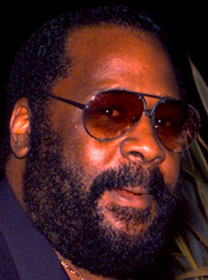
What age did you begin playing musical instruments?
Maybe about 10 or 11 I played the ukulele. There was a man who lived two doors from me named Mr. Williams. When I’d come home from school I’d see him on the porch and I’d sit down and listen to him play. One day I asked him, “Mr. Williams, can you teach how to play the ukulele?” I was amazed at his playing because he was blind. It just so happened he had another ukulele and he taught me how to play. I would rush home from school sit on the porch and play with him. I’ll never forget it [….starts to hum a few notes of the song.] Ya know it wasn’t any Hawaiian music. I didn’t have on a grass skirt!
When did you begin playing your first guitar?
I remember one day we went up to this music store because my Mother had to have a head put on her tambourine for church. When we would go to the store I would always look at the guitars. I thought maybe one day I could get a guitar. I asked the guy, “do you have any used guitars?” He said, “You know it just so happens we do have a guitar that just came in.” I asked how much it was and he said it was fifteen dollars. I begged my mother to buy it. I think we gave him $7 down on the guitar. It was an acoustic guitar with one of those brown rag cases. Two doors down on the other side of my house, there was a guy who played gospel and he played guitar. In the summertime you could hear him on the street and I used to mimic what I was hearing. My older brother began playing as well. I started taking my guitar to church. Nobody could hear me because it was acoustic.
When did you get your first electric?
I was sitting on the porch one day and I saw my Father walking down the street. He said to go help my mother because the car had broke down. I’ll never forget it! A black’54 Pontiac. I didn’t want to but my Dad made me. I walked down the street to my Mother and she said to get the boxes out of the trunk. I looked and she had went to Sears-Roebuck and bought me a Silvertone guitar with the little amp. I was like a pig in shit. I was so happy. I used to sit around the house and play all the time. My brother used to mess around with it. Then he started playing with a band. He never let me play with his band because they thought I was too young. I wound up being better than him by the time I was 14 or 15 years old. Any gigs my brother couldn’t do, I would do. It was great because I could only play on weekends and I could make $5 a night. Sometimes I’d luck up and make $15 in a weekend. $15 was a lot of money back then because you could get those kangaroo shoes…. You’d spit-shine the toe and it was like, “don’t step on my blue suede shoes.” It was cool. You could get an extra lunch with an extra roll and an extra dessert. Beside that my father didn’t have to give us lunch money
What was your first experience in a band?
I was standing outside and the town was having a parade. I’ll never forget. There was this band called the Montclairs. They sounded pretty good. They were playing on the back of a pickup truck.
So how did you land at Motown?
Bobby Taylor heard me play one night and decided he wanted me to join his band. He talked to my Father and finally convinced him to let me go to Detroit. It just so happened that my mother had a sister in Detroit. So when I first got to Detroit I stayed with her. It was really interesting because she owned a restaurant and her husband was a plant worker. You see, years ago either you work at Phillip Morris, Dupont, RJ Reynolds, places like that or the post office. These were good jobs. You stick with them. When I went to Detroit everyone worked for a factory: GM, Ford and all that stuff. She was kinda board so she opened up a restaurant. It was a little joint with typical foods. You know hamburgers, fries and etc. I think her husband was alcoholic but it didn’t bother me. I kind of knew what it was though I had never drank before. My Aunt always told me that I should stay away from alcohol because it drains your creativity. But I didn’t have to deal with my Aunt and Uncle that much because with Motown I was always on the road.
How long before you moved on your own?
When I got to Motown I lived with my Aunt for the first six months. When I moved out, I moved to this hotel right next to Motown. It was called the Royal Palm Hotel, and man it was full of pimps and hoes. It was fine because half of the time I was out on the road. I’ll never forget the guy who ran the hotel for his mother. There was one room they had knocked a couple of walls out. It was like a suite. It had three bathrooms, a big bedroom and a piano in it. I forgot how much it cost but everybody would be saying, “Let’s go by Wah Wah’s!”
When you began playing for Motown how did the players accept you?
The guys at Motown laughed at me when I first came in. They had their clique. They had just finished doing “Cloud Nine” with Dennis Coffey playing wah wah. I used to see how Norman Whitfield used to treat him. Robert White took me under his wing. Once they let me in they took a liking to me.
What was your introduction to the wah wah pedal?
I saw Dennis playing this pedal and one day I asked what kind of pedal he was playing and he said it was a wah wah pedal. He told me where to get one. I was playing with Bohannon at the time. They were twelve pieces and Michael Henderson would play trumpet and Ray Parker would play guitar and I would play guitar. This guy Henderson used to own a music store. One day I walked into his store and asked him if he had a wah wah pedal. He took out the black case. It was a Vox Cry Baby and I don’t remember how much it was. He let me borrow it some of the time because he knew I wasn’t going anywhere. I looked at the instructions, “down up down up.” It didn’t sound right, but everytime I got a chance to play something it would be “wah kow wah koh wah.” I was the guy that was floating around when Bobby was too busy. That was when I played with the Undisputed Truth and The Originals.
How did you get the name Wah Wah?
I remember I had an Acoustic 260 amp. It had two 18″s in it and it had a blue horn on top, dual channels and it had a tuning fork in it that I would tune to 440mhz. The way it was done back then was they had the amps in the back of the stage and the horns would be at the front of the stage. The horn players were older guys, maybe fifty. One guy, I think his name was Hooks, had slicked back hair and the ring around his lips so everybody knew what he played horn. Sometimes before we would begin playing he would say, “Turn that chooka chooka wah wah shit down!” So every now and then people would ask me my name and I would tell them “Chooka Chooka Wah Wah.” It later shortened to Wah Wah. People in the crowd people started chanting “Wah Wah, Wah Wah” and the name stuck.
Is Watson your real last name?
No…
Where did the last name Watson come from?
One time I was trying to get through on the phone to someone and it was busy. Back then we didn’t have any call waiting so you could ask the operator to break through and ask the person if they wanted to get off the phone to accept the call. The operator ask my name and I told her “Wah Wah”. He said he couldn’t say that over the phone so he asked for my last name and it just didn’t sound right. So I started thinking. I knew the KKK had three K’s in a row that seemed to give it power and I wanted something that was more powerful. I thought Wah Wah Washington, Wah Wah White, but it didn’t click until I said “Wah Wah Watson.” I said, “That’s it, that’s my name,” I thought. Then it all made sense. As I began to get good at the wah wah, I began to think about changing my style. I started incorporating more percussive kinds of rhythms. So when I started doing sessions, which I think the first one I used it on was the Four Tops, “Nature Planet”, it got to the point that the name really meant something.
What separated you from the other players?
I started using more effects and getting more technical. I got involved in the seventies with Maestro: Bob Moog and Tom Oberheim. They made a phase shifter, the Boomerang Wah Wah, the Universal Synthesizer, and a modulator. They’d fly me to Hawaii or wherever to do clinics. We would demonstrate how people could use the effects. People would see how it worked and off of impulse buy the products. The stores made money, I would get flown to nice places, and get the equipment for free. Then I think Pearl merged with Maestro. Golf and Western owned Pearl. I didn’t know what merging was before, but I soon saw that they had a lot of other gear that they sold as well. The first one I tried was the fuzz pedal. I didn’t like it because that was rock. I mean, I liked Jimmy Hendrix, but I didn’t think I’d be playing that. Then I did “Death Wish” with Herbie Hancock in ’73. I remember the year The Exorcist came out and Linda Blair’s head went around and made that noise and began spitting stuff up. I thought I could make that noise with the fuzz and the wah wah. So I began creating different conversations between the effects. The straight guitar is one conversation, the wah wah is another, the Echoplex is another conversation and so is the fuzz. So I only used that fuzz for one thing, the growl. People would ask what I was thinking about when I made that growl sound. I said, “remember when Linda Blair spun her head around and spit out that pea soup? That’s all it is.” So I looked at it more like sound effects.
When was the first time you played the wah wah live?
“Shaft” came out while I was playing with The Undisputed Truth. We were playing at the NBC Convention Center in Hawaii. We were opening for the Commodores and the Jackson Five and we had Smiling Faces from the Undisputed Truth. I remember Norman saying he wanted the kind of stuff like on Shaft. I wanted to take it to another dimension. More pulse, more motor-oriented. I would sit in the studio and after I had already done my part, Norman would track the vocals and sometimes things would still not be happening. So I would help them transition. I could sense how technical I had become. I had changed from my Curtis Mayfield and Wes Montgomery roots. I was technical yet I knew what I was trying to say and I knew how to do it. I played on “Nature Planet”, “Up the Ladder to the Roof”, “ABC”, and everybody knew who Motown was.
How many songs do you think you’ve play on?
I really don’t know. Too many to count. I just keep doing what I do and take the knowledge that I’ve learned and sit down and figure out ways to do what feels good to play. I wasn’t in this to become the best with the most songs. I was just in it to for the love of music and to make a living doing something I love.
Has that lifestyle ever been a problem for you?
Filling out applications and trying to get credit, I would put self-employed and the red light would go off. My parents would always say that it was important to have A1 credit so I would never limit myself from the things I need or want.
What were the standards of Motown taught you?
Motown was an independent black record company. When I got there you had Jamerson, Earl Van Dyke, Joe Messina, Eddie Willis, Dennis Coffey, and Robert White. They were my mentors. Motown had their own writers, producers and choreographers. They had people to teach dance moves to the Supremes, Temptations and the Four Tops. Some producers would have breakfast or sandwiches waiting for us and we’d sit around and eat and talk then we’d go in the studio and we’d knock out whatever project. It was business. It wasn’t like royalty but they knew they had to act a certain set of standards. They knew how to deal with success gracefully. When a person said be there at 7 o’clock, you knew they would be there on time. You were taught this! It was always better to be there a little early than have to be there late and make up an excuse. Little things like this you would learn.
How do you think other people see Wah Wah?
I always speak my mind and a lot of people don’t want to hear the truth. To a lot of people I’m aggressive and arrogant, but I just don’t bite my tongue. My old lady says I lack tact and diplomacy. I don’t just go out to disrespect people. I wouldn’t want that done to me. I am respectful but I speak my mind. Some people come up to me and tell me a bunch of stuff I’ve done and that I’m a legend. I say I’m not. I’m just a musician who worked a lot.
List some of the people you have your fondest memories recording with?
I think the most enjoyable sessions I had were with The Temptations. It was just me and the producer in the studio. That’s what taught me about the art of overdubbing. That’s why I can come up with so many different options as far as how to play a figure. They would just tell me to lay it back or more moody and I knew what it meant because I was hearing it my mind four dubs down the line. Musicians today don’t understand that. If you listen to Smiling Faces you can hear how a mood can pick up the song. It was supposed to move at the point where I began playing double time and I knew what to do. Nowadays when I record I have to educate guys and explain what I want in the studio. If it’s not done this way, it becomes boring.
Were there any moments of regret?
I went to Norman at one point when producers were telling me to play…just play. They didn’t care what I played and I began feeling used. I asked him, “What am I supposed to do with that. I felt used almost as if they wanted my name on the record and that would make it a hit”. Norm told me to stop taking the sessions if I was bored. He said, “They don’t always know what they want and that’s what they pay you for, for what you do.”
When did you make the transition from sessions to songwriter?
Sometimes I would come home from a session dissatisfied. I would record at home to just get that feeling that I couldn’t get in the studio. And that’s how I created songs.
How did you begin playing with Barry White?
I came out here for four days to LA in ’73 to do Rare Earth. We knew Barry White was recording and everybody knew Norman so he introduced us. He knew of the Temptations recordings I had done. Barry asked if I could play with him on a few tracks. It was great playing with Barry White. It was the five of us in a studio and Barry would be telling everybody else what to play. When it came time to tell me what to play, he said, “Fuck you.” And I would say fuck you too. What he was saying was why should I tell you what to play. It’s like all the experience I have compiled from all the sessions over the years is why I can sit down and create the way I do. Even though the moods or feeling of a song I played on with my wah wah sound like it was from a producer it wasn’t, it was always my sound. In the same year I had a session with Quincy Jones. I remember all that jazz he did. I showed up at the studio and I told him it was a pleasure meeting him. He said, “No, no, no… back up. Are you the guy that did that thing in Detroit?”. I told him yeah. Then he said, “It’s a pleasure meeting you.”
When did you meet Herbie Hancock?
When Marvin Gaye was recording “Let’s Get It On” Herbie was playing in the same session. Herbie and I started talking and the next thing I knew I got a call from Herbie. I guess I was the new kid on the block and people would tell me to give them that thing. After Herbie the same thing happened with Norman Connors and everybody else.
I had a session with John Lee Hooker. I had never heard of John Lee Hooker before so I didn’t know what to expect. This whole thing is like a fairy tale. I‘ve been very blessed with a lot of talent. When I did the John Lee hooker thing I got to arrange a song called “Homework.” And that’s when I got hooked with the Pointer Sisters because the producer heard me on the tape and that’s when I did “I bet you got a chick on the side.”
Where do you think you will go from here?
Since the ‘70s I have written, produced, and played in sessions with artists from Marvin Gaye to Maxwell. I have been involved in almost every genre in existence. I am not sure where it will go, but I just want to be able to educate some of the upcoming musicians and be a part of the music, because is my passion!
LATEST WAH WAH NEWS
Wah Wah has recently completed an album with the group ATF and is still doing sessions. Some of his most recent credits are Maxwell, Chico DeBarge, Me’shell Ndegéocello, and Brian McKnight. Wah Wah also says he look forward to having fun this summer as he will be playing at the Playboy Jazz Festival.